When you need a Locksmith in Woodside Park or the N12 area, knowing exactly who you are hiring matters. Many websites claim to be local but are actually national call centres that dispatch random, out-of-town subcontractors.
These national networks often lure customers in with unrealistically low price quotes, only to inflate the final bill upon arrival. Worse yet, they frequently rely on unnecessary drilling, install low-grade hardware, and add on excessive emergency fees.
Established local Locksmith companies normally operate using a genuine London landline. A true local number is often a good indication that the business has real roots in the area and isn’t just a call-forwarding service.
The local BT telephone dialling code for the area is ‘020 8446’
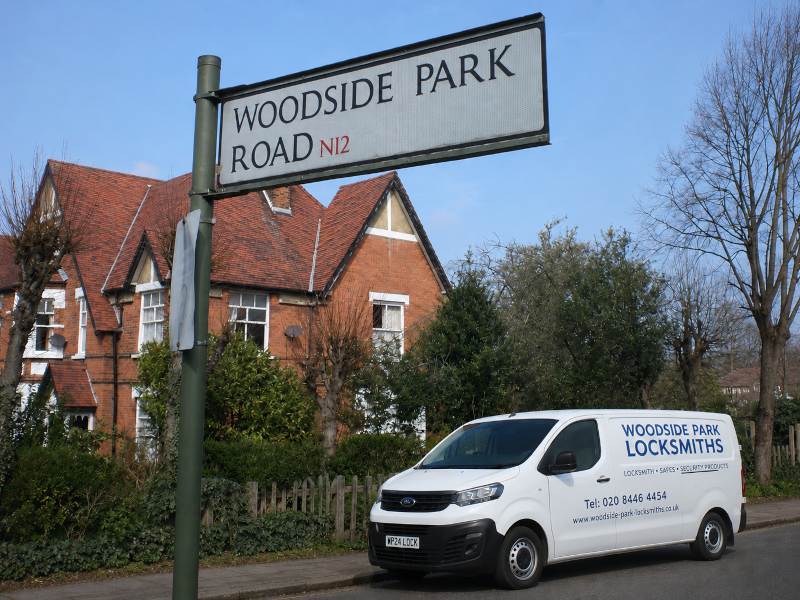
We have had our local N12 number for decades, our number is Tel: 020 8446 4454
Woodside Park Locksmiths is an established North London Locksmith company known for straightforward pricing, professional workmanship, and reliable local service.
We regularly install, repair, and upgrade a wide range of high-security locks including:
Trusted Lock Brands: Yale, Chubb, Banham, Ingersoll and other insurance-approved locking systems.
Getting the number of a trusted locksmith before an emergency happens can help you avoid rogue traders and unnecessary call-out costs later on.
Woodside Park Locksmiths provides Locksmith services throughout Woodside Park, North Finchley, Mill Hill, Totteridge, Whetstone and Barnet.
Recent locksmith work has been completed on roads including:
Argyle Road, Chanctonbury Way, Cissbury Ring East, Cissbury Ring North, Cissbury Ring South, Cissbury Ring West, Courthouse Road, Folkington Corner, Fursby AVENUE, Guildown Avenue, Linkside, Lullington Garth, Mickleham Down, Offham Slope, Poynings Way, Pyecombe Corner, Rodmell Slope, Saddlescombe Way, Scaynes Link, Singleton Scarp, Springfield Close, Steyning Way, Sussex Ring, Walmington Fold, Westbury Grove, Westbury Road, and Wolstonbury.
Professional Locksmith services including lock repairs, lock replacement, uPVC door locks, safes, security upgrades and planned attendance throughout Woodside Park and surrounding areas.
We are NOT scammers. We are NOT a call centre. We are just experienced local Locksmiths providing honest, transparent and reliable service across Woodside Park and the surrounding areas.
Years Experience
Transparent Pricing
Real Locksmiths
We are a trusted local Locksmith providing a wide range of security and locksmith services for residential and commercial properties throughout Woodside Park, North Finchley, Totteridge, Whetstone, Mill Hill and the surrounding Barnet area.
Fast and reliable repairs for worn, damaged or malfunctioning locks on doors, windows and gates.
Replacement locks supplied and fitted to improve security, meet insurance requirements and restore peace of mind.
Specialist repairs for uPVC and composite doors including lock mechanisms, gearboxes and alignment issues.
We have partnered with London & Home Counties Safes
Please click here to view the range of safes available.
Improve the security of your home or business with upgraded locks, cylinders and additional protection measures.
Designed and installed master key systems for offices, apartment buildings, schools and commercial premises.
Secure key safe installation providing convenient access for family members, carers and trusted visitors.
Professional installation of London Bars and Birmingham Bars to strengthen vulnerable door frames.
Supply, fitting and repairs for Yale night latches and other trusted rim locking systems.
British Standard mortice locks fitted to timber doors for enhanced security and insurance compliance.
Installation and servicing of CISA locking systems commonly used on gates, communal entrances and commercial properties.
Expert fitting and replacement of high-security Ingersoll locks for homes and businesses.
Replacement and upgrading of window locks to improve security across timber, aluminium and uPVC windows.
Supply and installation of dependable UNION locks and architectural hardware for residential and commercial use.
Servicing, repairs and replacement of traditional Chubb locks and other high-security locking systems.
Modern smart lock installations offering keyless entry, remote access and enhanced convenience.
Secure locking solutions for side gates, garden gates, metal gates and external access points.
Mechanical and electronic keypad locks fitted for controlled access to homes, offices and shared buildings.
Garage door lock repairs and upgrades to help protect vehicles, tools and stored belongings.
Commercial locksmith services including shopfront locks, shutter locks and access control solutions.
High-security Mul-T-Lock cylinders and restricted key systems professionally supplied and fitted.
Heavy-duty security solutions for warehouses, industrial units, workshops and storage facilities.
Supply and installation of premium Banham locking systems for enhanced property security.
Replacement postbox locks, mailbox keys and secure access solutions for residential and commercial properties.
Finding a locksmith during an emergency can be stressful, which unfortunately makes it easier for rogue traders to take advantage. For advice from the Master Locksmiths Association on spotting dishonest operators, click here .
Online reviews can be helpful, but not all reviews are genuine. We encourage customers to look for consistent feedback across multiple platforms and to verify reviews wherever possible.
Before agreeing to any work, ask for a clear breakdown of all charges. This helps avoid unexpected call-out fees, labour costs, lock surcharges, or other additional charges being added later.
Even in urgent situations, it is worth obtaining more than one quotation where possible. A reputable locksmith will be transparent about pricing and happy to explain the work required.
Woodside Park Garden Suburb is a distinct, planned residential enclave built between 1929 and 1939 within the N12 postcode of Finchley, North London. Geographically bounded by the Dollis Brook to the east, Folly Brook to the north, and Finchley Golf Course to the south, it was intentionally designed to marry suburban tranquility with easy city access.
The Woodside Estate: The land originally belonged to Woodside House (later Woodside Farm), a property with roots tracing back to at least 1699.
The Railway Arrival: In April 1872, the Great Northern Railway opened Torrington Park Station (renamed Woodside Park Station in 1882). This sparked Victorian and Edwardian housing developments to the east of the tracks, but the land to the west of the Dollis Brook remained untouched open fields.
Send us your details and we will get back to you shortly.
Contact Woodside Park Locksmiths for professional Locksmith services, lock repairs, safes and security upgrades throughout Woodside Park N12 and surrounding areas.
WhatsApp UsSome History About Woodside Park Garden Suburb
The Mastermind: In 1929, developer Fred J.C. Ingram bought the rural land west of the brook to build a low-density "garden suburb".
Design Philosophy: Ingram limited construction to just eight houses per acre. He emphasized wide, tree-lined streets, grass verges, and sizeable domestic gardens.
The Expansion: By 1936, the Leyland Construction Company joined the project, building additional semi-detached and detached homes south of the Folly Brook.
Transit Anticipation: Both builders actively marketed these homes knowing that London Transport's "Northern Heights" project would soon electrify the local steam railway and integrate it directly into the London Underground Northern line.
Architecture and Community Identity
Sussex Connections: Many of the roads in the suburb—such as Chanctonbury Way and Steyning Way—were named after locations in Sussex.
Sussex Ring: This circular road junction was established as the primary commercial and social heart of the suburb. It originally housed essential neighbourhood amenities, including an ironmonger, a butcher, and a post office.
The Woodsider: In 1937, the community founded the Woodside Park Garden Suburb Residents' Association. They published the first edition of The Woodsider newsletter, which continues to run to this day.
Wartime to Modern Era
The Northern Line: The planned integration with the London Underground was finally completed in 1939–1940, firmly cementing the area as a prime commuter hub.
Preservation: Very few new houses have been built since the original phase concluded in 1939. The area consists of 861 properties. While some homes have added roof conversions or paved over front gardens, the quiet, village-like character envisioned by Fred Ingram is protected tightly by the local Residents' Association.
1. Famous Past Residents
While the Garden Suburb is known for its quiet, unassuming character, the immediate Woodside Park and Finchley area has been home to several major figures in entertainment, science, and politics:
Emma Bunton: The most famous modern resident of Woodside Park is "Baby Spice" of the Spice Girls, who grew up in the local area.
W.B. Tegetmeier: A eminent 19th-century naturalist, journalist, and pigeon expert lived in Woodside Park. He was a close friend and collaborator of Charles Darwin, providing Darwin with crucial research on domestic bird variation for his work on evolution.
Henry Charles "Inky" Stephens: The wealthy businessman and inventor of the famous "Stephens' Blue-Black Ink" lived just south of the suburb at Avenue House (now Stephens House & Gardens). He served as the local MP and bequeathed his estate to the public.
Political Giants: The wider constituency was famously represented for over three decades by former Prime Minister Margaret Thatcher.
2. Formation of the Dollis Valley Greenwalk
The picturesque 10-mile (16 km) Dollis Valley Greenwalk that acts as the eastern boundary of the suburb has roots that pre-date the housing estate:
The Brainchild: The green corridor was conceived in the 1930s by leading Finchley Councillor (and later Mayor) Alfred Pike. Originally named the "Brookside Walk", Pike recognized that rapid suburban development risked swallowing up London's natural streams.
A Clever Border Strategy: Because the Dollis Brook marked the strict boundary between the Borough of Finchley and the Borough of Hendon, Pike successfully negotiated with neighbouring Hendon councillors to acquire land on both sides of the water. This ensured the pathway remained seamless and continuous.
Railway Soil: When the nearby London Underground/railway tracks were originally laid down, the heavy clay and earth dug up from the trenches were dumped along the north-east corner of the brook, creating some of the steep, naturalistic mounds seen today.
Modern Integration: Decades later, the London Borough of Barnet joined forces with the Countryside Commission to formalise the path into the Greenwalk we see today, linking Moat Mount Nature Reserve all the way down to Hampstead Heath.
3. Architectural Design Guidelines
Unlike the nearby, heavily restricted Hampstead Garden Suburb—which is governed by a strict private Trust—Woodside Park Garden Suburb relies on a mix of standard London Borough of Barnet planning policy and vigilant oversight by the Woodside Park Garden Suburb Residents' Association (WPGSRA).
Character Protection: Development must adhere to Barnet’s Residential Design Guidance. This enforces strict rules regarding scale and massing to ensure that extensions do not overshadow the uniform 1930s semi-detached and detached streetscapes.
The "Garage Rule": Many properties are permitted to convert their original 1930s garage structures into habitable rooms. However, guidelines typically dictate that the replacement front window must aesthetically mirror the property's original character rather than using modern, unsympathetic glazing.
Dormers and Rooflines: To preserve the original roof profiles designed by Fred Ingram, new loft conversions are heavily scrutinised. Planning rules lean toward small, rear-facing or side-facing dormer windows rather than massive, blocky box extensions that ruin the view from the street.
Hardstanding and Green Verges: One of the biggest modern challenges is the paving over of front gardens for car parking. Local guidelines encourage porous, sustainable drainage materials to protect the neighbourhood from surface water flooding into the nearby Folly and Dollis brooks